
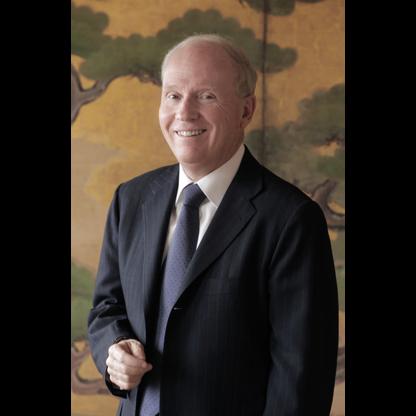
William E. Macaulay — Who Is He?
William E. Macaulay (1945–2019) was an American billionaire known mainly for:
1. Private Equity Investing
He was the co-founder and CEO of First Reserve Corporation, one of the world’s largest private-equity firms focused on the energy industry (oil, gas, energy infrastructure).
2. Wealth
His net worth once exceeded $1 billion, earned mostly from:
-
Private equity deals
-
Energy-sector investments
-
Long-term business leadership
3. Education
He studied at City College of New York (CCNY) — and later donated $30 million to the school.
This gift led to the honors program being named The Macaulay Honors College.
4. Philanthropy
He gave to:
-
Education programs
-
Scholarships
-
Community development projects
5. Career Path
Before becoming a billionaire:
-
He worked at Oppenheimer & Co.
-
Then co-founded First Reserve in 1983
-
Built it into a major global investment firm
Quick Facts
| Topic | Summary |
|---|---|
| Born | 1945, New York City |
| Died | 2019 |
| Known For | Private equity in the energy sector |
| Company | First Reserve Corporation |
| Philanthropy | Education, CCNY, honors college support |
William E. Macaulay — Full biography
William Edward “Bill” Macaulay (Sept 2, 1945 – Nov 26, 2019) was an American investor and private-equity pioneer best known as the co-founder and longtime leader of First Reserve, a private-equity firm specialized in energy deals. He built a reputation as a low-profile but highly influential figure in energy buyouts and energy-sector investing. Wikipedia+1
Early life & education
-
Grew up in the Bronx, New York. Wikipedia
-
Bachelor’s degree in economics from City College of New York (CCNY). He later earned an MBA from Wharton. Wikipedia
Early career
-
Worked at Oppenheimer & Co. (1972–1982), where he led corporate-finance and private equity activities including investments in energy. He later co-founded Meridien Capital prior to First Reserve. Wikipedia+1
First Reserve and rise
-
In 1983 Macaulay co-founded First Reserve (with John Hill). Under his leadership the firm became one of the largest energy-focused private-equity managers in the world, raising many billions to buy, consolidate, and grow oil & gas and energy services companies. privateequitywire.co.uk+1
Philanthropy & public profile
-
Donor to education: his major gift (commonly reported as $30 million) to the City University of New York led to the naming of the Macaulay Honors College. He was regarded as a substantial education philanthropist while keeping a low public profile in business. Wikipedia+1
Later years & death
-
He stepped back from day-to-day leadership in later years (handed reins to other partners) and died Nov 26, 2019 (age 74). His passing was covered by major outlets noting his role as an “energy buyout pioneer.” Private Equity International+1
Business-strategy summary — how Macaulay built his wealth
-
Specialize deeply in a single sector (energy).
Rather than spreading broadly, First Reserve focused on energy (exploration & production, services, midstream, energy tech). That sector expertise let the firm source proprietary deals and add operational value. privateequitywire.co.uk+1 -
Buyouts and roll-ups in fragmented markets.
First Reserve used buyout capital to acquire standalone, often family- or privately-held energy businesses and combine or scale them — a classic private-equity value-creation play in a fragmented industry. Forbes+1 -
Use of institutional capital & fundraising skill.
Macaulay and partners raised large, specialized funds from institutional investors (pension funds, endowments), enabling big deals that produced outsized returns when oil or services markets were favorable. Forbes -
Operational focus and management oversight.
First Reserve emphasized hands-on oversight (board seats, management appointments, operational improvements) rather than passive minority investments — letting them actively re-shape portfolio companies. Forbes -
Timing / commodity exposure risk management.
Energy investing is cyclical. First Reserve benefited in booms but was exposed in downturns (e.g., post-2014 oil crash industry issues). The firm later diversified into related infrastructure and energy services to reduce pure commodity exposure. That strategic pivot was part of First Reserve’s later evolution. The Wall Street Journal+1 -
Low personal profile, high firm continuity.
Macaulay stayed relatively private, while building a durable firm culture and succession plan that allowed First Reserve to keep fundraising and deploying capital through cycles. Private Equity International
Net effect: deep sector focus + buyout scale + institutional fundraising = concentrated opportunity to capture value in energy, which translated into Macaulay’s personal wealth (Forbes estimated ~$1.1B at time of death). Forbes+1
Career timeline (concise, date-keyed)
-
1945 (Sept 2): Born in New York City. Wikipedia
-
1960s–1970s: Education — CCNY (BA economics) and Wharton (MBA). Wikipedia
-
1972–1982: Oppenheimer & Co. — director of corporate finance, private-equity investing, president roles in energy subsidiaries. Wikipedia
-
Early 1980s: Co-founded Meridien Capital (private equity). Wikipedia
-
1983: Co-founded First Reserve Corporation (energy-specialist private equity). privateequitywire.co.uk
-
1990s–2000s: Grew First Reserve into a major energy buyout firm — numerous funds, many large energy investments and exits. Forbes+1
-
2006–2008: Major philanthropic gift(s) to CUNY / Macaulay Honors College; the brownstone and endowment coverage appears in press in 2008. Wikipedia+1
-
2017: Announced leadership transition — Macaulay hands more day-to-day duties to new partners. Private Equity International
-
2019 (Nov 26): Died at age 74. The Wall Street Journal+1
Short comparison: Macaulay vs other big energy billionaires
Below is a short, focused comparison showing how Macaulay’s path differed from other well-known energy billionaires (selected examples). Net worth figures change over time — I cite Forbes/Wikipedia profiles for the profiles below.
| Person | Main business / source of wealth | Strategy / how they made money | Short contrast to Macaulay |
|---|---|---|---|
| William E. Macaulay | Private equity in energy (First Reserve) | Built a specialized PE firm that bought, restructured, and exited energy companies — institutional fund model (raised funds). | Institutional investor and fund manager (projected returns across many investors). privateequitywire.co.uk+1 |
| Harold Hamm | Founder & major owner of Continental Resources (oil & shale) | Founder-operator of an E&P company; built value through exploration, drilling and owning large acreage (fracking/shale pioneer). Net worth tied to company equity. | Operator/founder with direct oil-field ownership vs Macaulay’s fund/portfolio approach. Forbes+1 |
| Mukesh Ambani | Reliance Industries — diversified conglomerate (refining, petrochemicals, retail, telecom) | Family conglomerate, vertically integrated (refining → petrochemicals → retail/telecom); huge public company equity holdings. | Extremely diversified conglomerate owner (scale & public markets) vs Macaulay’s private-market buyouts. Forbes |
| Charles Koch | Koch Industries — diversified private conglomerate (energy, chemicals, trading) | Built & ran a sprawling private industrial empire with control of operating companies and private ownership. | Long-term private industrial ownership and operating model (like Hamm/Kinder contrast), not an institutional private-equity firm. Forbes+1 |
| Richard Kinder | Co-founder & executive of Kinder Morgan (midstream pipelines) | Built value in midstream (pipelines, terminals) — stable fee-based cash flows and regulated assets. | Focus on midstream stability and infrastructure vs Macaulay’s buyout and cyclical upstream focus. Forbes+1 |
Quick takeaways:
-
Macaulay = private-equity specialist: built a firm that raised capital from institutions and used buyouts/operational fixes to create value. Forbes+1
-
Others (Hamm, Ambani, Koch, Kinder) are founders/operators or long-term private owners of large public/private energy companies; their wealth is more directly tied to company equity and operating results, rather than an institutional fund management model.