


Internal Rate of Return (IRR) for Investing Project
Internal rate of return (IRR) is the discount rate that makes Net Present Value (NPV) of investment zero.
NPV =sum of present value of each cash inflow – initial investment when NPV=0, so sum of present value of each cash inflow =initial investment
Investing project has only one IRR.
To determine IRR, we can use the following way:
IRR= r1 + [(r2-r1)/(NPVr1-NPVr2)] x NPVr1, so normally discount rate 2( r2) > discount rate 1 (r1)
Project Decision:
– if IRR>cost of capital => accept the project
– if IRR<cost of capital => Reject the project
Advantages for Internal Rate of Return (IRR):
- Closely related to NPV, often leading to identical decisions.
- Easy to understand and communicate.
Disadvantages for Internal Rate of Return (IRR):
- May result in multiple answers or not deal with unconventional cash flows.
- May lead to incorrect decisions in comparisons of mutually exclusive investment
Example:
Capital investment of $10,000 for three years has cash flows below:
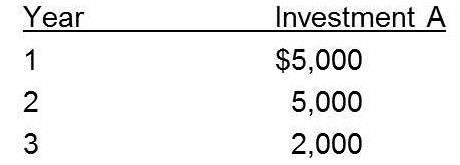
Required:
- Calculate internal rate of return (IRR)
- Make decision, and required rate of return of 15%
Solution:
- Internal Rate of Return (IRR)
NPV=5,000/(1+r)^1 +5,000/(1+r)^2+2,000/(1+r)^3 – 10,000
NPV at 10% = $177
NPV at 12% = ($126)
IRR=10%+[(12%-10%)/(177+126)] x 177 = 11.17%
- Decision
IRR=11.17%
Required rate of return = 15%
15%>11.17%, so the project should be rejected.
Source:
- Phnom Penh HR
- Mcgraw-Hill – Fundamentals Of Corporate Finance